

Historical Spotlight: Alice Coachman
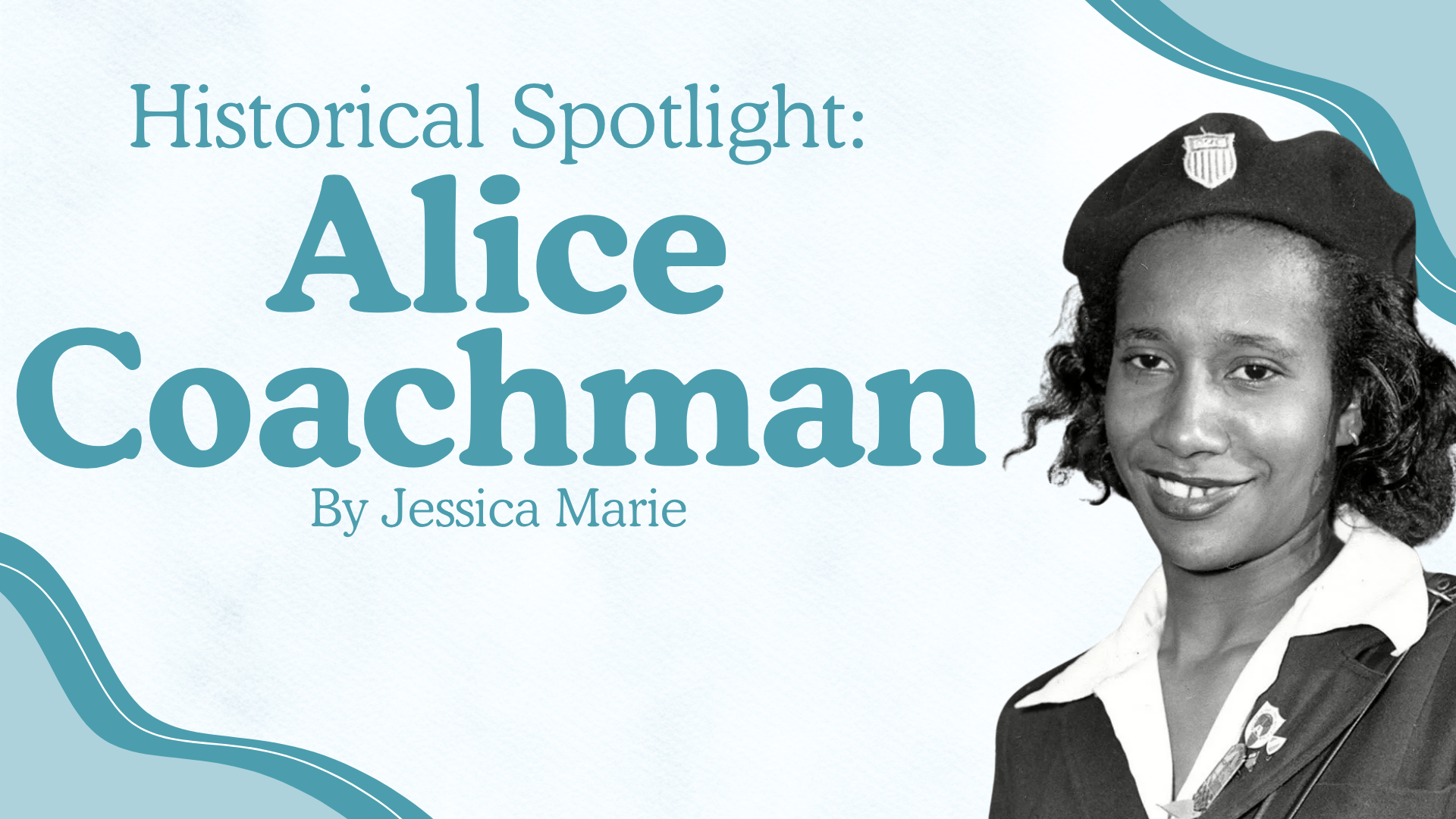

I was born and raised in a small, country corner of Southwest Georgia and it always brings me joy when I find someone new that’s either from there or simply heard of the area. Even though I’ve moved away, it’s still ingrained in my mannerisms and my dialect can easily morph depending on who I’m talking to. Despite it being so far from Metro Atlanta, there have been many greats born on that land who have made history and influenced Black culture. Join me as we shine a Historical Spotlight on Alice Coachman, the very first Black American woman to win a Gold medal in the Olympics.
Alice was born on November 9, 1923 in Albany, Georgia to her parents Fred and Evelyn Coachman. She was her parents’ fifth child out of ten. She grew up during a time when segregation and Jim Crow ran rampant and was unable to use athletic training facilities or participate in organized sports because of her skin color.
She was also an aspiring athlete during a time in history when women were actively banned and discouraged from participating in sports. The widespread opposition festered until 1972 when Title IX passed and gave women athletes equitable opportunities, scholarships, and benefits as male athletes at public schools.
As a child, she was initially encouraged by her 5th grade teacher and her aunt to lean into her athletic skills. Instead of concentrating on what she didn’t have, she trained by running barefoot on the dirt roads near her home, using homemade equipment to practice her jumping, and anything else she could find available to her.
In high school, she joined the track team and quickly caught the attention of Tuskegee Institute, which offered her a scholarship at just 16 years old to join the Tuskegee Preparatory School. She competed in the Amateur Athletic Union’s Women’s National Championships from 1939 to 1948 and won ten national championships in a row. She broke the college and national high jump records all while competing barefoot.
She became known as the “Tuskegee Flash” because of her unusual jumping style and success. In total, she won 26 national championships and racked up titles in high jump, the 50-meter dash, the 100-meter dash, and the 400-meter relay team.
She also played as a guard on Tuskegee women’s basketball team and won three conference championships. Unfortunately, she wasn’t able to compete in the 1940 and 1944 Olympic Games since they were canceled because of World War II.
While enrolled at Tuskegee Preparatory School, she was required to work while studying and training. She graduated from Tuskegee Institute with a degree in dressmaking in 1946. The next year, she continued her schooling at Albany State College and received a B.S. in Home Economics with a minor in science. After graduating, she found work as a teacher and a track-and-field instructor while continuing to compete professionally.

Alice finally got her opportunity to compete on a global stage during the 1948 Olympic Games. She was the only American woman to win a Gold medal and her status as a celebrity grew once she returned home to the States. She met President Harry Truman, was honored with parades from Atlanta to Albany, and was thrown a party by Count Basie. She also became the first Black American woman to endorse a major, international product after signing as a spokesperson for the Coca-Cola Company and was featured on advertising billboards with Jesse Owens.
Despite her massive success, the reporting of her as an athlete was hit or miss. At the time, male athletes received full spreads with photos, extended interviews, and thorough articles, while female athletes typically only received short blurbs without any pictures. Her record-breaking performance during the 1948 Olympics was minimized to only one sentence by the New York Times.
She officially retired from professional track and field when she was 24 years old and dedicated the rest of her life to education and to the Job Corps. She married her first husband, N.F. Davis, and had two children before the pair divorced. She married her second husband, Frank Davis, and was with him until his death.
Alice died at 90 years old on July 14, 2014 in her hometown of Albany. She suffered from cardiac arrest that stemmed from other respiratory problems and a stroke that happened a few months prior to her death.
She was inducted into the U.S. Track and Field Hall of Fame in 1975, the Georgia Sports Hall of Fame in 1979, and the U.S. Olympic Hall of Fame in 2004 for her amazing accomplishments. She was also honored during the 1996 Summer Olympic Games in Atlanta as one of the 100 greatest Olympians.
Alice broke records while challenging the status quo and forcing long-lasting changes in female sports. She paved the way for other inspirational athletes like Flo-Jo, Jackie Joyner-Kersee, and others to get into track and field and excel.
If you enjoyed this musing, I’d love to hear your thoughts. Like, comment, share, and subscribe so you don’t miss what’s next!
Signed,
Jessica Marie

