

Historical Spotlight: Vicente Guerrero
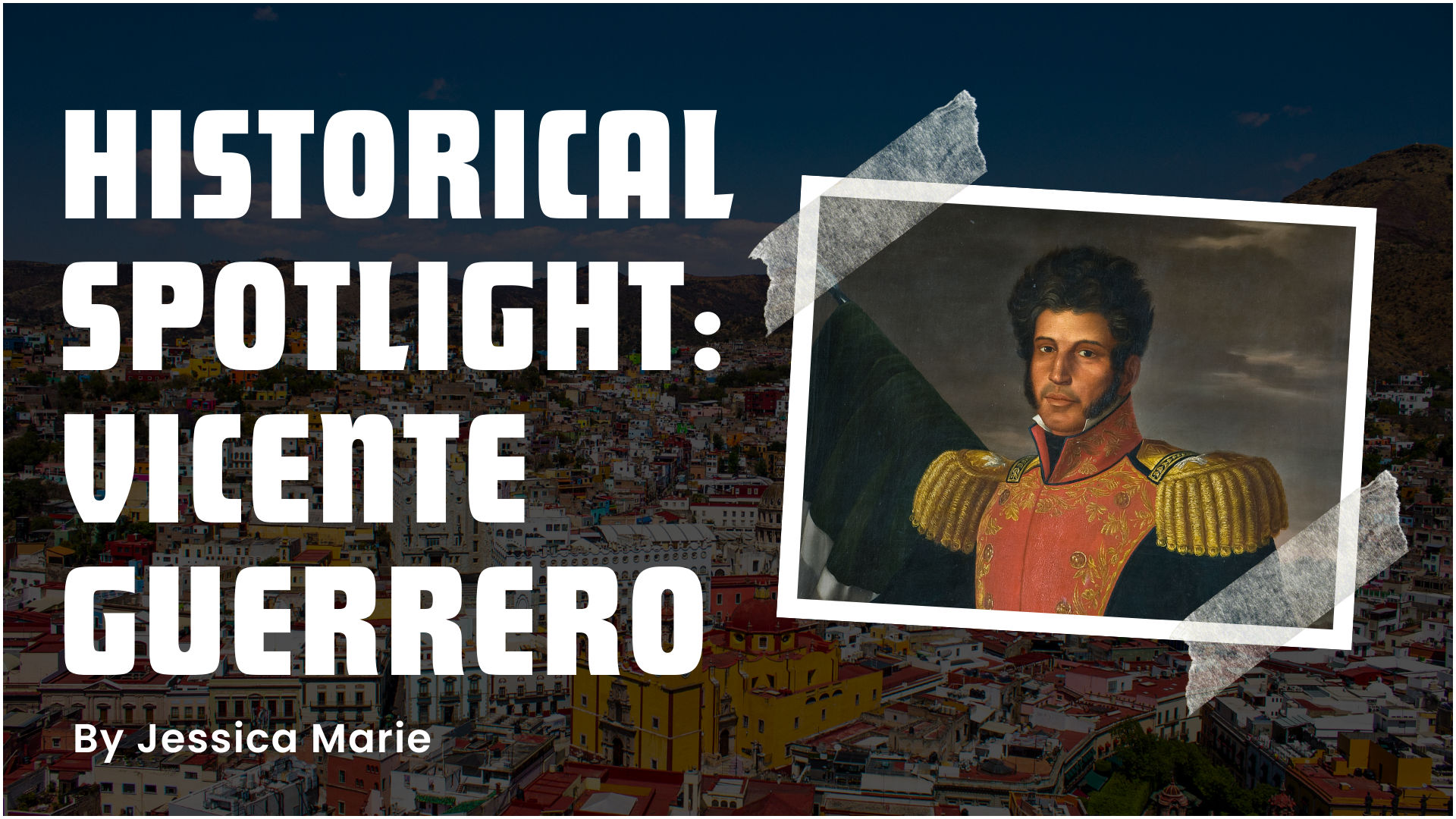

While Black Americans have had a long, torrid fight for our rights in the United States, there have been small pockets of revolutionaries around the world who have also advocated for our equal treatment. From chattel slavery in the Caribbean to indentured servitude in Europe, the world has always had a negative perception of melanated people. Join me as we shine a Historical Spotlight on Vicente Guerrero, the first Black president that fought for equality and abolished slavery in Mexico.
Vicente was born on August 10, 1782 to his parents Maria Guadalupe Rodriguez Saldaña and Juan Pedro Guerrero. The family lived in a town called Tixtla (“TEEX-tlah”) that was located about 100 kilometers from the nearest major seaport. During his youth, Vicente travelled across the country while working for his father’s successful mule-driven freight business. As he saw and experienced new things, he was exposed to emerging ideas of independence and dissent against Spanish rule.
As he grew into his own as a man who opposed the Spanish colonial government, he had to come to terms that the people he loved were on the other side of the spectrum. His father was a supporter of Spanish rule while his uncle held a prominent position in the Spanish militia.
Refusing to ignore his beliefs, he enlisted in the insurgent army in December 1810. He joined the fight during the early revolt against Spain but by the time the Mexican War of Independence really intensified, he had gained enough military experience to provide strategic advice. He also spoke to and united the indigenous people across the region since he understood the language and was of mixed Indigenous, African, and Spanish ethnicity.
The indigenous people in Mexico weren’t recognized by the Spanish as citizens. During a speech in 1815, Vicente called for extending citizenship to them to establish a larger society, thus increasing their number of supporters and likelihood of success.
He was notable for his guerrilla tactics and was named Commander in Chief of the rebel troops after the previous leader was caught and executed. In 1816, the royal government sought to end the insurgency by offering amnesty. Vicente’s father even tried to persuade him to surrender, but he refused.
Political changes in Spain finally swayed the Mexican government to unite with Vicente’s forces for independence in 1820. The proclamation called the Plan de Iguala created the Army of the Three Guarantees, called for a constitutional monarchy, and abolished the formal caste system of racial classification. While the document didn’t explicitly include mulattos and Black people, Vicente advocated for everyone to receive equal protections under the law and refused to agree to any alternative.
After the war, he continued being active politically and ran for the presidency in 1828. He campaigned on political opportunities for all people regardless of race and wealth through universal suffrage in Mexico. Unfortunately, he lost because some people were concerned about his radicalism. Others vehemently supported him and the civil unrest that ensued scared the elites because of the intense violence and property damage.

The President-elect resigned and went into exile in England, leaving Vicente to take the office on April 1, 1829 as the nation’s second president. The fact that he was a mixed-race man rubbed some people the wrong way while other people supported his efforts to extend rights and equal treatment to all Mexicans, no matter their skin color.
His most known accomplishment during his term was formally abolishing slavery in most of Mexico. Even though the slave trade had already been banned by the Spanish in 1818, the formal declaration from the Mexican government came on September 16, 1829.
He also worked for the creation of public schools, land title reforms, industry and trade development, and other liberal programs to advance the racially and economically oppressed. During his term, the Spanish tried to reconquer Mexico, but were unsuccessful.
On December 4, 1829, he was forcibly removed from office during a rebellion led by his vice president, Anastasio Bustamante. On January 14, 1831, he was lured and kidnapped by an Italian merchant ship captain who received a reward of 50,000 pesos for delivering him to the Mexican federal troops.
He was tried by a court-martial and was executed on February 14, 1831 by a firing squad. His death marked the end of the rebellion in southern Mexico but the politicians who were involved in his capture and execution paid heavily with their reputations amongst the public.
He was only 48 years old at the time of death and left behind his wife, Maria Guadalupe Hernández, his daughter, Maria Dolores Guerrero Hernández, and a legacy of fighting for what you believe in. There was speculation that he was executed instead of sent into exile because of his ethnicity and the overall disapproval of Black people holding any substantial political, social, or economic stature in life.
Vicente is considered a Mexican national hero because he never stopped fighting for equal civil rights for all citizens. He was a Black man who stood against Spanish oppression and abolished slavery, understanding that everyone in a society should be valued, protected, and supported.
If you enjoyed this musing, I’d love to hear your thoughts. Like, comment, share, and subscribe so you don’t miss what’s next!
Signed,
Jessica Marie

