

Historical Spotlight: Marian Croak
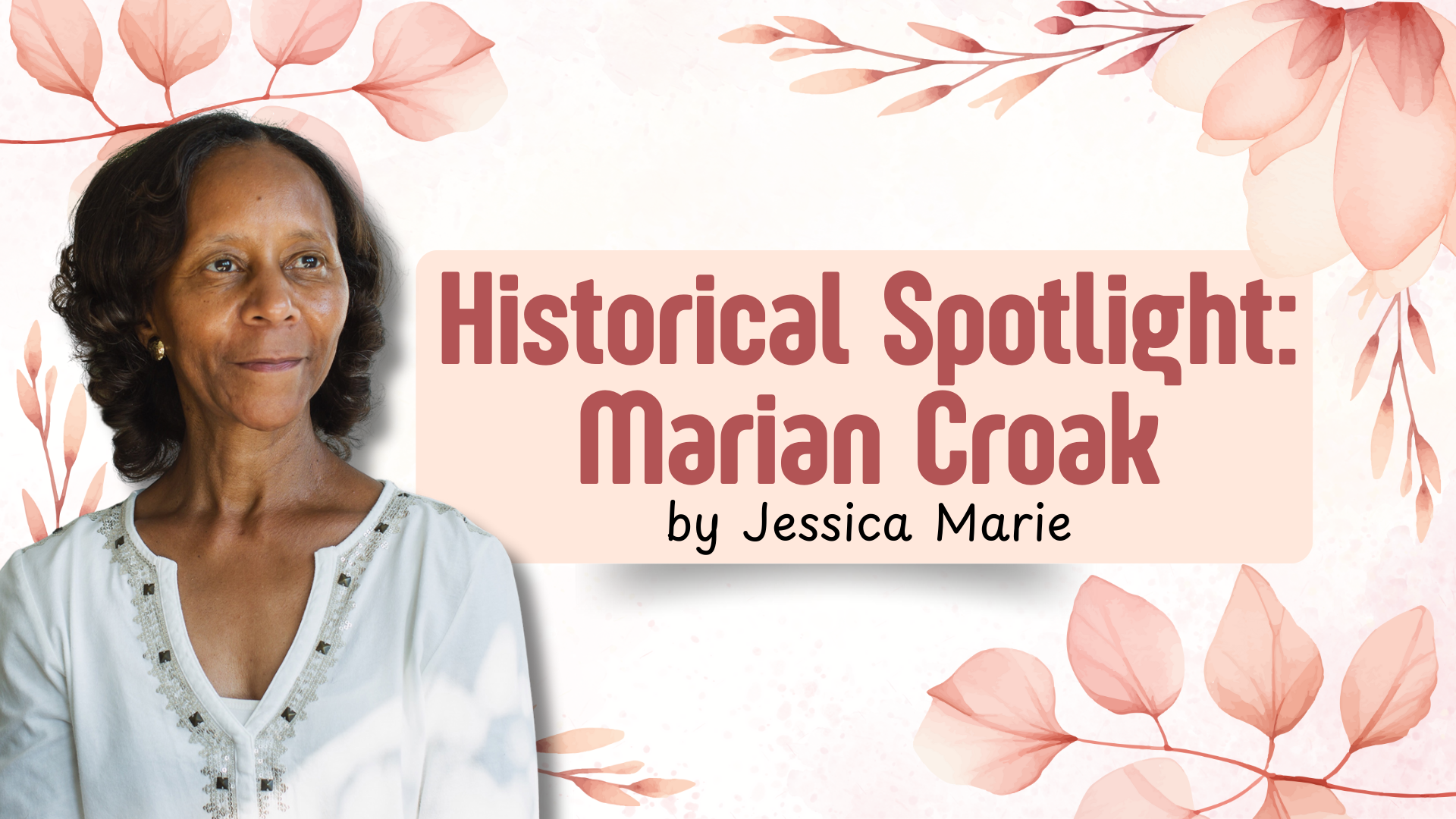

Skype used to have a firm hold on the virtual conferencing market until the 2020 pandemic forced companies like Google, Zoom, and Microsoft to create competing products. When everyone had to shelter in place, businesses were forced to embrace new methods of communication with customers and employees. Families that were spread out used some creative ingenuity to maintain close relationships, but none of that would have been possible without some key technological advancements decades prior. Join me as we shine a Historical Spotlight on Marian Croak, the Black American woman who originally developed the voice over IP technology that drives video conferencing.
Marian was born on May 14, 1955 in New York City. She always had a love for technology thanks to her dad, who built her a chemistry set when she was young. Even though he only had an elementary school education due to the system of segregation and discrimination experienced by almost all Black Americans, he helped cultivate her early exploration of the sciences.
She made it her life’s mission to fix broken systems after being fascinated by the inner workings of plumbing, electricity, and other home-related maintenance as a child. She attended Princeton University and earned her undergraduate degree in 1977. Marian continued her education at the University of Southern California and received her PhD in Social Psychology and Quantitative Analysis.
After graduating, she was hired by AT&T Bell Labs, an American industrial research and development company owned by Nokia, and began her professional career in the Human Factors division. She studied how technology could be used to positively impact people’s lives. She initially focused on digital messaging apps and researched if they could communicate with other similar apps.
Since it was before the mass deployment of the Internet in 1983, her research was groundbreaking and led to the standards we know today. At the time, the normal process for sending voice, text, and video data digitally was called Asynchronous Transfer Mode (ATM) protocol, but Marian and her team advocated that using TCP/IP would be a better, standardized way of packaging and communicating information.
Over time, she worked on advancing Voice over Internet Protocol (VoIP) technologies to convert voice data into digital signals that were easily transmitted over the internet instead of traditional phone lines. Fast forward decades later and it’s the exact process that drives current audio and video conferencing.
She also patented the technology that allowed cell phone users to donate money to organizations using text messaging. Seeing a need after the devastation of Hurricane Katrina, she developed this technology and completely revolutionized how people donate during natural disasters. She was inspired after seeing a similar concept developed to allow text message voting for American Idol contestants.
She even received the 2013 Thomas Edison Patent Award for her text message donation technology. During the 2010 Haiti earthquake, more than $43 million in donations were collected by relief organizations through text message thanks to her invention decades prior. It was an ingenious way of giving average consumers a tangible method to get involved.

As time went on, her expertise and leadership increased. She managed over 2,000 engineers and computer scientists that were responsible for over 500 different programs. She was responsible for everything from product realization and service planning to development and testing. She rose to Senior Vice President of Applications and Services Infrastructure before leaving for another challenge.
In 2014, Marian joined Google as a vice president in the engineering group and has been focused on expanding the Internet’s capabilities around the world and increasing access to it in the developing World. She has created a new center of expertise on Responsible AI that focuses on ethical development of the tool within Google Research. She’s also worked on Human Centered AI and exploring the unlimited possibilities.
She serves as an example for all girls and women that they too can achieve their dreams in technology, STEM, and engineering. In 2016, she was inducted into the Women in Technology International Hall of Fame. In 2022, Marian was inducted into the National Inventors Hall of Fame (NIHF), the National Academy of Engineering, and the American Academy of Arts and Sciences. She was the one of the first two Black women inducted into the NIHF and one of only 30 Black inductees.
She has over 200 patents, almost half of which are in VoIP. Many of her early inventions laid the groundwork for how we currently communicate. The digital networks, social media platforms, and virtual audio and visual conferencing abilities wouldn’t be possible without her substantial work.
For example, back when Marian was a child, the idea of video chatting with other people across miles, states, or even countries was nowhere near a feasible idea. Fast forward a few decades and FaceTime, Zoom, and WhatsApp have all made a living by offering the software to consumers worldwide.
One of the early adaptors, Skype, didn’t continue innovating and eventually got left behind because other products offered more robust advancements. Microsoft, who bought Skype in 2011, officially retired the consumer version of the product on May 5, 2025 in an effort to convert more people over to using Teams.
Zoom, on the other hand, completely took off by offering free subscriptions, an easy to use product, and exemplary customer service. It’s still used nationally and many people view it positively as a tool to stay connected with long distance family and friends.
Teams has supported business functions and is involved in almost every Microsoft-based work ecosystem. It integrates seamlessly with Microsoft O365 and even allows companies to communicate externally while maintaining an acceptable level of security. Without Marian’s inventions, none of these companies would exist today.
Marian has three children, but has kept her life private despite the growth and prominence of the internet. She decided from a young age to follow her dreams and will forever be remembered as the creator of VoIP. She’s living proof that there’s nothing you can’t do if you’re determined, disciplined, and dedicated to constantly learning and improving.
If you enjoyed this musing, I’d love to hear your thoughts. Like, comment, share, and subscribe so you don’t miss what’s next!
Signed,
Jessica Marie

